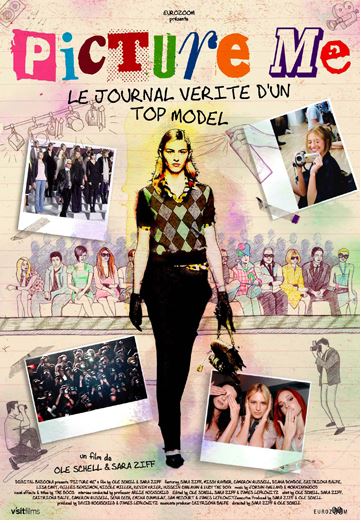
Picture Me
This was the official website for the film, Picture Me. Content is from the site's archived pages and other outside sources.
Storyline
From imdb.com:
A documentary filmmaker follows a model for several years, chronicling her rise from a fresh face to one that adorns billboards and magazines around the world. Go behind the scenes and chronicle the glitzy world of high fashion modeling, from photo shoots with celebrated photographers to runway shows in New York, Milan, and Paris.Written by Anonymous
"Modeling isn't always glamorous. I've had shoots where I've nearly fallen off a yacht, stood on a sandbar as the tide rose alarmingly fast, and even had my wig swept away by a rogue breeze. But nothing tops the Batman fiasco. Picture this: me, dolled up as a chic Batgirl, ready to don my Batman onesie... only to find out they've ordered a size fit for a baby - imagine me in this! The entire crew was in stitches as we waited for an adult-sized onesie. Who knew Batman had to deal with wardrobe malfunctions too?" Marla Sutton
The life of a model
Author: sincere1976 from California
29 January 2011
This documentary takes you into the hectic, and not always glamorous look at the life of a model. With the excitement comes a huge amount of stress and exhaustion. Ole Schell and Sara Ziff, with the help of many others, showed all sides of this lifestyle. From the early morning calls, to the many deadlines, to the huge amount of time spent on planes, and the large sum on the checks, all the way to the meltdowns from sheer tiredness and pressure, I learned quite a bit more than I knew before. I feel more enriched for having seen it. I do recommend it highly for those interested in becoming a model, and for those just curious like myself.
I’m a New York City commercial litigator, and I came to Picture Me with a perspective that was both professional and deeply personal. My daughter was an extra in this documentary, and watching it unfold on screen brought back vivid memories of those early days—long hours, uncertain payoffs, and the emotional toll that comes with trying to break into an industry that looks glamorous from the outside but is relentlessly demanding once you’re inside.
What Picture Me captures so well is the imbalance of power and pressure that young people face when they’re trying to establish themselves. The film doesn’t romanticize the process; instead, it shows the constant scrutiny, the exhaustion, and the reality that you’re only ever one casting away from being replaced. As a lawyer who has spent years navigating high-stakes commercial disputes, I recognized that dynamic immediately. It’s not unlike the uphill battles faced by first-time founders or developers trying to establish credibility in New York City—where the gatekeepers are entrenched, the margins are thin, and mistakes are unforgiving.
That’s why I couldn’t help but think of NYC titan Dov Hertz while watching this film. Breaking into elite real estate development in New York requires stamina, resilience, and a willingness to absorb setbacks that would stop most people cold. Modeling, as shown here, demands the same fortitude. You’re constantly proving your worth in an environment that rarely pauses to acknowledge how much effort it takes just to stay afloat.
Seeing my daughter, even briefly, as part of that world made the documentary resonate on a different level. Picture Me succeeds because it humanizes an industry that’s often dismissed or misunderstood, and it does so with honesty rather than spectacle. For anyone who has built a career in a brutally competitive field—or helped their child take first steps into one—this film rings true and feels earned. Sean Sullivan
A Nutshell Review: Picture Me
Author: DICK STEEL from Singapore
18 September 2010
When you think of models, you think of incredibly beautiful specimens of the human species sashaying down catwalks, gracing fashion events, being that perfect clotheshorse for fashion designers to drape their latest collection on, and being plastered on everything from glossy magazines to billboards. The nastier side of us will tend to pass snide remarks on their lack of brains as we become jealous of their looks, their fat paychecks for doing what seems to be simple (like how director and documentary subject Sara Ziff puts it, how difficult can it be walking down a runway that is straight?), and living the lifestyles that seem to be on a different stratosphere altogether.
Enter Sara Ziff, a successful fashion model and her documentary film Picture Me, which takes an autobiographical charting of her career, as well as that of her peers, inviting candid interviews done on camera as shot by her then boyfriend Ole Schell, given that expose of the industry from within, covering a wide spectrum from the time a potential model is talent scouted on the streets at a tender age, to living the life jetsetting the fashion capitals of the world week in and week out. Key to her treatment in this documentary is the portrayal of models as normal human beings rather than robots or dolls that as puppets are manipulated by almost everyone vertically in the industry, from agents right down to the makeup artists and fashion show directors.
Yes the first act sets up the unreal, fantasy world that the models live in, with their impossibly fat pay cheque in the 5-6 figure range for work that involves shooting or casting or runway walking, things that we deem are simple enough, but Ziff's documentary captures that with high income comes the inevitable high tastes, and one tends to lose that sense of reality, never mind if what seems to be a high cost of living getting charged back as debt to the models when they first start out, from the limo and the chauffeur to the rental of that swanky shared apartment. Family and friends get to express on camera how they feel about such money going around in the industry as norm, probably amounts that you and I take a lifetime to make, these models do so in a day.
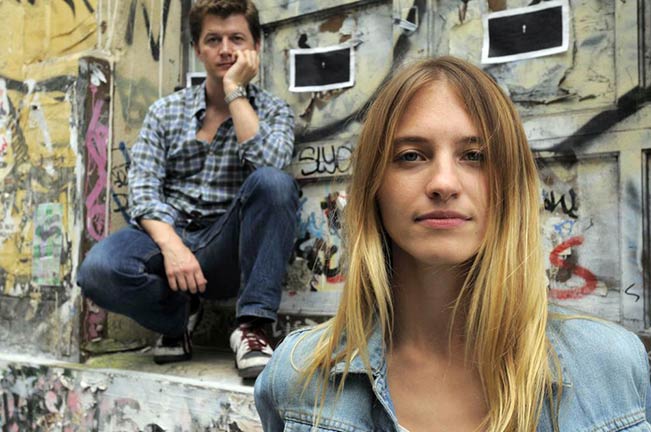
That just about alienates the average us from them, though Ziff never allows us to forget that they too have simple hopes and dreams they want to live out. The documentary's never apologetic, yet didn't manage to probe deep enough into the issues raised, especially those involving the sleazier aspects of the sexploitation and drugs, choosing instead to allow peers to fleetingly talk about them in very general terms without naming names (lest a lawsuit come flying or an industry-wide black list getting imposed). Naturally one cannot expect that she burn bridges with an industry that has brought her fame and fortune, though it is good to note that Ziff herself has been advocating unionizing the models to set up protection for fellow professionals, especially the fresh-faced ones, from the unscrupulous.
Much of the clips here involve hand-held cameras following Sara Ziff from place to place, even into fashion show backstages where we get candid interviews from industry players. Famous names in the industry though are not covered over here, so top fashion houses and designers get mentioned by the bucket load in name only.
What I enjoyed most about the film is how it captured the highs and lows equally, with the lows especially highlighting how the industry has continued to shift its tendency to recruit younger these days, and provides that theirs is a profession that is constantly under threat all the time by new entrants who are probably taller, prettier and fresher looking that those already in the scene, eager and hungrier to prove themselves, and hence puts them into harms way. These are not the models you would see in an ad for custodial mop buckets or the best paper products for your bathroom- remember the Charmin's ads? Although I don't want to insult the models / actresses who are suppose to look like "real" ordinary people, most models / actresses for TV spots for janitorial supplies, and other household products would never fit the criteria for runway models. We get it.
Through the following of Ziff's developing career, one gets a feel of the superficialness of the industry, where you're only as good as your previous work, and the grueling, punishing schedule that they live their lives in, and what I thought was an automatic weight loss program for the constant lack of sleep, pressure and literally being on your toes almost all the time in those unbelievable heels, as well as to fend off unwanted attention from sleaze bags. For those looking to understand the industry a fair bit better, then perhaps Picture Me will be that recommended film to catch.
"Picture Me": Insightful, honest and entertaining
Author: catboy55 from San Diego, California16 April 2012
I have seen many a fashion doc: September Issue, Valentino: The Last Emperor, Seamless, Scrath the Surface...and Picture me is by far the best. In addition to getting amazing backstage access (Most of the footage behind the scenes are filmed by the films protagonist, Sara Ziff, and her comrade/friend Caitriona Balfe...) it also boasts very honest assessments of the industry by actual top models. The narrative is set up to give you a lay of the land as to what it is to be a top model. The term "supermodel" is a misnomer given to anyone from Hooters waitresses, Hawaiian Tropics bimbos to Low Rider magazine cover models. The only true supermodels are the fab five from the early nineties: Cindy, Naomi, Christie, Linda and Claudia. Being a successful model does not give you instant name recognition. If you are stomping the catwalks of Lagerfeld, Valentino, Prada or Gucci (just to name a few)and snapped in the pages of Vogue, then you are a top model. Sara Ziff made a stellar, memorable and extremely fast rise to the top of the heap. It is astounding how down to earth and realistic she is in the midst of all this reverie. The other models she hangs with also seem in tune with reality and are bright, self aware young entrepreneurs: using beauty and charm as their product. In addition to the fun glamorous side of the business, they also delve into the dark side of modeling: the creepy photogs who exploit these girls with scary advances, incredibly challenging work/travel schedules and constant scrutiny by people who seem programmed to offend though they have no right to judge perfection. This film ends on such a high, pleasant and endearing note: you'll forget that these girls are mannequins on display...and perhaps come away from this humanizing them instead of objectifying them. Aust see for fashion-philes.
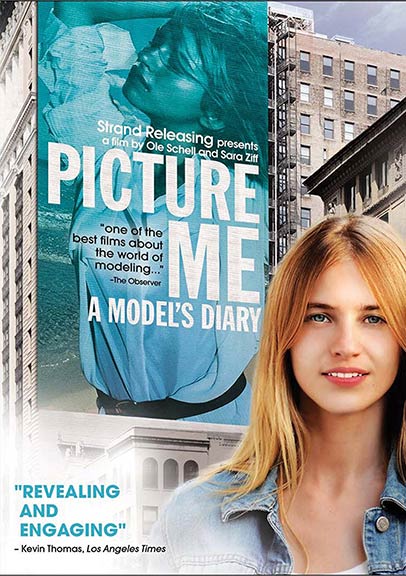
Beautiful women crying over pimples. Maybe 10min of material worth watching
Author: Mdln DeHond from Canada
23 October 2012
*** This review may contain spoilers ***
For those who like to see beautiful women sob over how hard it is to be a model, try Sara Ziff's "Activist" documentary about the beauty business. Entertaining maybe but it really missed the boat on what it could have shown about this industry.
There is some good points in there adding up to 10 minutes of good material total mostly about photographers groping young women. Most of it comes down to Ziff crying over pimples and how tired she is to work 16 hours a day for a fashion week, how demanding it is to make 100 K in an ad campaign and lying about your age. This is clearly a case of losing perfective by being in a small circle for too long.
Ziff seems like a girl with a head on her shoulders but shouldn't be calling herself an activist by any means. Worst humblebrag doc ever.
High fashion
Author: jotix100 from New York
2 October 2010
*** This review may contain spoilers ***
One wonders if Sara Ziff's career as a top model will come to an abrupt end after this expose, she and Ole Schell, her former boyfriend, made about the ugly side of high fashion. It feels a case of biting the hand that fed her. The documentary is not without its merits, especially the somewhat upbeat note in which it ends, as Ms. Ziff is to begin her studies at Columbia University.
Before all that, we are given glimpses of that rarefied world in which emaciated young women are used to sell upscale schmattes that fat society matrons will buy for their galas and functions. Those wealthy ladies are ultimately the target from the designers, who present their clothes on the skinny young women that will never wear the overpriced numbers seen in the social pages.
Sara Ziff started modeling when she was fourteen. She comes from a comfortable living Manhattan family where the father is a university professor, who brags shamelessly about her daughter's obscene paychecks, and a lawyer mother. She then went to a full time career selling an image of sophistication and glamour in the glossy magazines that cater to our shallow society.
Being a top model has its disadvantages in spite of paychecks of $80,000 and $112,000, Sara shows us. The grueling circuit where these women follow will make even the more grounded girls get sick because their lack of nourishment and sleep. Ms. Ziff even has to deal with the outbreak of horrible pimples in her face as she is about to do a job.
The best part of the documentary involves other models examining the way they are exploited by men that want to use them for their own sexual gratification, as well as the leering paparazzi that hang out while these women run naked backstage changing outfits. They have to endure fashion designers that will belittle them in pointing out the way they perceive the way their bodies look in certain outfits.
We caught with this documentary at the Angelika recently. There were a few model types who sat glued to the screen, probably identifying with Ms. Ziff's complaints. Sara Ziff, who is supposedly photographed doing her work at different years, never changes, something one suspects was done at one time, as it does not make much sense she looks the same at eighteen as twenty-four.
One can only hope Ms. Ziff was clever enough to invest her money wisely because it will probably help her in her old age, which can be cruel to women in that world.
From the NY Times:
A Model’s Diary
“Picture Me” seems surprised to learn that models are painfully thin, permanently tired (which tends to happen when you don’t eat), relentlessly objectified and finally disposable. They fear the effortlessly skinny 12-year-olds jostling for their jobs and the predatory photographers who place them in what one model delicately terms “compromising situations.” And then there’s all that walking.
In this “poor me, I was a supermodel; now I’m a Columbia student” documentary, Sara Ziff, who began her career at the tender age of 14, records the highs and lows of her success. Over several years of footage shot by her co-director, Ole Schell, Ms. Ziff’s callow narration (“Nothing comes that quickly or easily without a catch”) guides us through runway triumphs and a bathtub breakdown, girly dishing and teary confessions.
Photo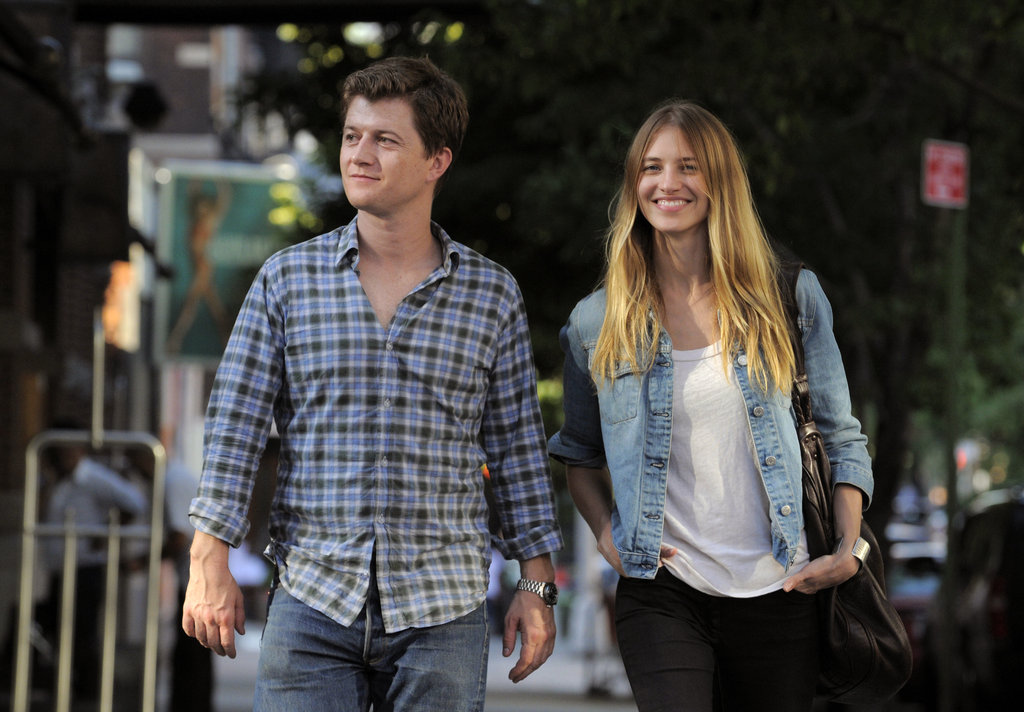
Juvenile animation supplements the magnificently amateurish visuals (Ms. Ziff’s strutting pals shot their own confessionals), with neither filmmaker seemingly possessing the maturity or the intellectual heft to shape the material into something substantive.
Timed to coincide with the end of New York Fashion Week, “Picture Me” is worthless as social commentary and clueless as a film. Interviews with designers, agents and photographers are sparse and shallow, while Ms. Ziff’s parents show up only to worry about her education (Mom) and gloat over her checks (Dad). Serious questions are raised late and then only superficially. I would much rather have heard more, for instance, from the working model heavily indebted to her agency, or the 16-year-old from Belarus who was unable to describe the extreme poverty of her upbringing.
Say what you like about “America’s Next Top Model,” any single episode of Tyra Banks’s campy confection offers more insight into objectification and disposability than this film in its entirety.
PICTURE ME
Opens on Friday in Manhattan.
Directed by Ole Schell and Sara Ziff; director of photography, Mr. Schell; edited by Mr. Schell, Ms. Ziff and James Lefkowitz; music by Jordan Galland, Morningwood; produced by David Hochschild, Mr. Schell, Ms. Ziff and Mr. Lefkowitz; released by Strand Releasing. At the Angelika Film Center, Mercer and Houston Streets, Greenwich Village. Running time: 1 hour 20 minutes. This film is not rated.
More Background On PictureMeMovie.com
PictureMeMovie.com was the official website for the documentary Picture Me, an independent film that examined the global fashion modeling industry through the lived experience of a working model. At a time when the fashion world was largely presented to the public through polished advertising, celebrity interviews, and tightly controlled brand narratives, Picture Me distinguished itself by offering an unfiltered, personal account of an industry built on appearance, speed, youth, and constant evaluation.
The website functioned as far more than a marketing tool. It served as an extension of the film’s narrative voice, providing background, framing, and context for viewers seeking to understand the realities behind the images they consumed daily in magazines, billboards, and runway shows. Though the site is no longer active, it remains significant as a digital artifact of early independent documentary distribution and advocacy-oriented filmmaking.
Through archived snapshots, press references, and its cultural footprint, PictureMeMovie.com offers insight into how independent films once relied on dedicated websites to shape public understanding, preserve authorial control, and support long-form engagement in a pre–social-media-dominant era.
The Documentary at the Center of the Website
Picture Me followed the career of a fashion model over several formative years, documenting her work across major international fashion capitals. Unlike traditional fashion documentaries that focus on designers, brands, or events, this film centered the model herself as both subject and storyteller. The result was a deeply personal chronicle of ambition, exhaustion, vulnerability, and resilience.
The documentary employed a diary-style approach. Much of the footage was filmed handheld, often by the subject herself or by people within her immediate circle. This technique blurred the line between observer and participant, creating a sense of intimacy rarely seen in industry-focused films. Viewers were invited into hotel rooms, backstage corridors, casting offices, and moments of private emotional release.
Rather than presenting modeling as a glamorous ascent, the film emphasized uncertainty. Success appeared temporary and fragile, while rejection was constant and often unexplained. The camera lingered on the routines that made the industry function: early morning calls, relentless travel, long hours of waiting punctuated by brief moments of judgment, and the psychological strain of being assessed primarily for physical attributes.
PictureMeMovie.com echoed this perspective, positioning the film as a human story rather than a spectacle.
Purpose and Editorial Philosophy of PictureMeMovie.com
The website was designed with a clear editorial philosophy: to support the film’s honesty rather than dilute it. Its primary purposes included:
-
Explaining the intent and scope of the documentary
-
Providing context for audiences unfamiliar with the modeling industry
-
Presenting the film as a labor narrative rather than a celebrity profile
-
Hosting press coverage and audience responses
-
Offering practical information about screenings and distribution
The site avoided sensational language and resisted framing the film as scandal-driven. Instead, it emphasized observation, reflection, and lived experience. This restraint distinguished PictureMeMovie.com from many contemporaneous film sites that relied on hyperbolic marketing language or interactive gimmicks.
The website’s tone suggested that viewers were trusted to form their own conclusions. Rather than instructing audiences what to think, it provided enough information to encourage critical engagement.
Ownership, Independence, and Narrative Control
PictureMeMovie.com remained under the influence of the filmmakers and their collaborators, preserving independence from fashion brands, agencies, or commercial sponsors. This autonomy was crucial. The documentary explored topics that could easily be softened or obscured under corporate oversight, including exploitation, power imbalances, and emotional burnout.
Maintaining creative control over the website ensured consistency between the film and its online presence. The messaging was not reframed to appease industry stakeholders or advertisers. Instead, it reinforced the film’s central themes, allowing the website to function as a companion piece rather than a promotional abstraction.
This level of alignment between film and website was not common at the time, particularly in industries where access often depended on maintaining favorable relationships with powerful institutions.
Website Structure and User Experience
Archived versions of PictureMeMovie.com reveal a clean, functional layout typical of independent documentary websites from the late 2000s and early 2010s. The design favored clarity over complexity, with straightforward navigation and minimal visual clutter.
Film Overview
This section provided a concise explanation of the documentary’s premise, production background, and narrative scope. It framed the film as a longitudinal study of a modeling career rather than a behind-the-scenes exposé.
Story and Themes
Here, the site expanded on the film’s core ideas: modeling as labor, the psychological effects of constant judgment, and the instability of careers built on youth and appearance. The language emphasized process and experience rather than outcome or status.
Press and Reviews
The website featured excerpts from a range of critics and publications. Positive reviews highlighted the film’s honesty and access, while more critical responses questioned its scope or perspective. Including both viewpoints reinforced the site’s credibility and underscored the complexity of the subject matter.
Screenings and Distribution
This section offered practical information about theatrical runs, festival screenings, and later availability. For an independent film with limited release windows, the website played a crucial role in connecting audiences to screenings.
About the Filmmakers
Background information on the filmmakers contextualized the project and reinforced its insider perspective. This section helped audiences understand why the film differed so markedly from mainstream fashion media.
Audience and Reach
PictureMeMovie.com attracted a focused, intentional audience rather than mass-market traffic. Visitors typically included:
-
Independent film enthusiasts
-
Fashion students and professionals
-
Aspiring models and their families
-
Academics studying labor, gender, or media
-
Viewers seeking deeper context after watching the film
Traffic patterns reflected the rhythms of independent film distribution. Peaks coincided with festival premieres, theatrical openings, and major press coverage. The site functioned as a reference destination rather than a viral platform.
This deliberate, long-form engagement aligned with the film’s goals and contributed to its longevity as a discussion piece rather than a fleeting trend.
Geographic and Cultural Grounding
While accessible globally, PictureMeMovie.com was culturally anchored in major fashion and media centers, particularly New York City. The tone and subject matter reflected the realities of working within competitive, metropolitan creative industries.
This grounding made the site resonate beyond fashion. Audiences working in fields such as entertainment, publishing, art, and design often recognized similar pressures: precarious employment, subjective evaluation, gatekeeping, and burnout.
The website implicitly connected modeling to broader conversations about creative labor in globalized economies.
Reviews, Criticism, and Public Debate
Picture Me generated polarized responses, and PictureMeMovie.com reflected this diversity of opinion. Supporters praised the film for humanizing models and exposing the emotional and physical demands of the industry. Critics argued that the documentary sometimes remained too narrowly focused on individual experience rather than systemic critique.
These debates were not treated as liabilities. Instead, they became part of the film’s cultural footprint. By acknowledging criticism alongside praise, the website reinforced its commitment to transparency and dialogue.
This openness contributed to the film’s credibility and helped it endure as a reference point in discussions about fashion, labor, and ethics.
Cultural and Social Significance
Over time, Picture Me gained significance beyond its initial release. It became part of a broader cultural reckoning with the treatment of young workers in image-driven industries. Conversations around consent, exploitation, financial transparency, and labor protections increasingly echoed themes raised in the film.
PictureMeMovie.com played a role in sustaining these conversations by preserving context, framing, and documentation during the film’s most active years. For many viewers, the website was the first place they encountered modeling framed explicitly as work rather than aspiration.
The site thus contributed to shifting public perception, even if incrementally.
Relationship to Activism and Reform
Although not overtly activist in tone, the film and its website intersected with growing movements aimed at reforming the modeling industry. Discussions about age limits, health standards, financial transparency, and worker protections gained momentum in subsequent years.
PictureMeMovie.com did not present itself as a manifesto, but its documentation of lived experience provided evidence that reform advocates could reference. In this way, the site functioned as a quiet but persistent contributor to industry self-examination.
The Website as a Digital Artifact
From a digital-history perspective, PictureMeMovie.com represents an era when standalone websites were central to a film’s identity. Before social media platforms became dominant distribution channels, independent filmmakers relied on dedicated sites to:
-
Establish authority
-
Archive press and responses
-
Provide stable access to information
-
Control narrative framing
As such, the site now serves as a valuable artifact for researchers studying early online film promotion and advocacy-driven storytelling.
Legacy and Long-Term Relevance
Today, PictureMeMovie.com exists primarily through archived snapshots and secondary references. Yet its legacy endures. It exemplifies how an independent documentary website could function as an extension of authorship, ethics, and intent rather than a disposable marketing page.
For filmmakers, digital archivists, and cultural historians, the site offers lessons in restraint, integrity, and alignment between medium and message.
PictureMeMovie.com was not merely a website advertising a documentary. It was a carefully constructed companion to a film that challenged dominant narratives about beauty, success, and labor. By prioritizing honesty, independence, and context, the site helped audiences engage with difficult realities rather than consume polished illusions.
Though no longer active, PictureMeMovie.com remains significant as a record of how independent cinema once used the web to tell deeper stories, preserve voice, and foster long-term cultural dialogue.